
The Difference Between Data You Have and Data You Can Trust
Your backend isn’t just infrastructure. It’s where raw data becomes reliable insights, where business logic gets defined once and used everywhere, and where your ability to make faster decisions begins.
Everyone Sees the Dashboards. Nobody Sees What Makes Them Possible.

When executives complain about data, they’re looking at dashboards. When BI teams struggle, they’re fighting with the backend.
Here’s what’s really happening behind those dashboards:
- Your BI person gets a request for a new dashboard-but first needs to pull data from four different source systems
- They reconcile why “revenue” means three different things across those systems
- They recreate business logic for calculating margins (because it lives in spreadsheets, not the database)
- They test whether adding this new query will break performance for existing dashboards
- They document what they built so someone else can maintain it
What should take 3 days takes 3 weeks. And that’s if everything goes smoothly.
The problem isn’t your BI team. It’s that they’re building on a foundation that fights them at every step.
What Your Backend Actually Controls
Think of your BI backend as the difference between a warehouse where every box is labeled clearly, organized by category, with a map showing where everything is versus a warehouse where boxes are piled randomly, labels fell off years ago, and only Bob knows where anything is (and Bob just gave notice).
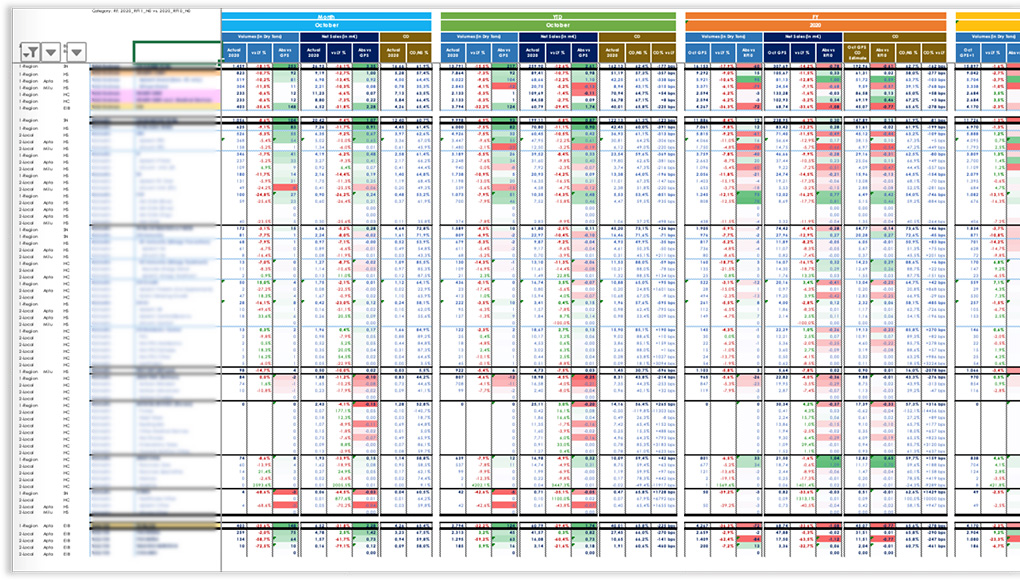
Traditional BI Backend
- Technical, cryptic field names and inconsistent terminology
- Reports built directly on physical schemas; logic hidden in report definitions
- Minimal metadata stored across tools or tribal knowledge
- Security implemented at report or database level only
- Legacy data warehouse with tight coupling to visualization tools
- Limited API exposure with point-to-point integration
- Compliance handled manually via policy documents
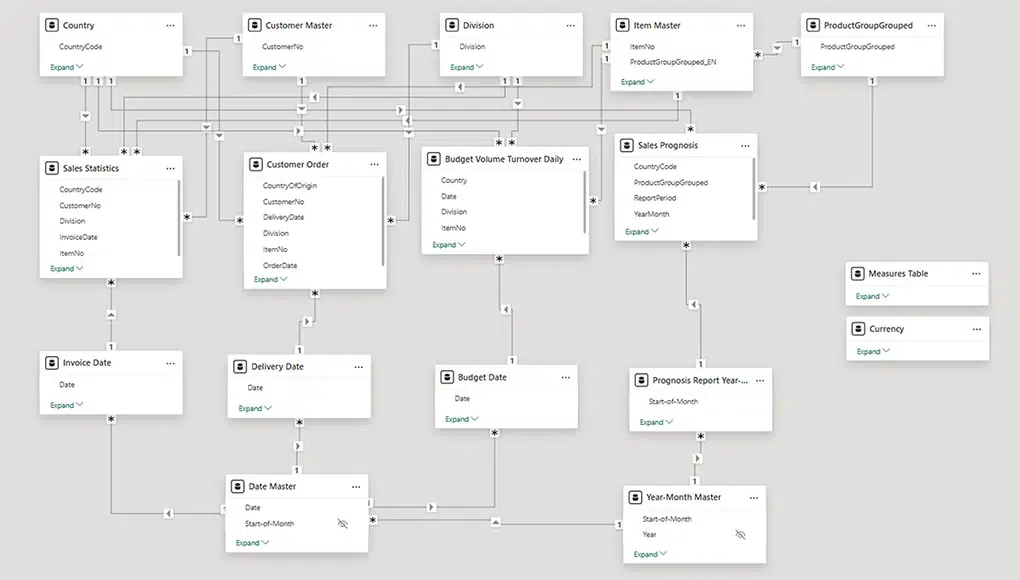
AI-Ready BI Backend
- Consistent, human-readable naming with clear business-language alignment
- Well-defined semantic model with explicit relationships and metric definitions
- Rich metadata catalog integrating business, technical, and operational context
- Security enforced programmatically in every AI-query context (row-level, column-level, masking)
- Modern, unified AI-integrated platform (MS Fabric, Databricks, Snowflake) with metadata APIs
- API-first design with standardized access for AI orchestration
- Automated policy enforcement embedded in platform governance
Your backend determines: How long new dashboards take to build. Whether everyone gets the same answer for the same question. How much time your team spends maintaining vs. creating. What happens when Bob leaves. Whether you can deploy AI capabilities when you’re ready.
Most importantly: A well-built backend gets better over time. A poorly built one gets worse. Every new dashboard, every new requirement, every business change either benefits from or fights against your backend architecture.
Three Things That Separate Good Backends From Bad Ones

The Bob Problem: When Business Logic Lives in People's Heads
A CFO asks “What’s our gross margin on Product Line C?” Three executives give three different answers: 32%, 28%, 41%. Nobody’s wrong – different definitions live in different places (ERP reports, Excel files, CRM dashboards). Traditional BI scatters business logic across individual reports. Each implements its own calculations. Over time, these diverge.
With AI-ready backends, business logic lives in one place. Gross margin defined once, calculated once, used everywhere. Same authoritative answer whether you pull a dashboard, ask a chatbot, or run a report. Meetings move from debating data accuracy to discussing what to do about it.

The 'Good Enough for Now' Trap
“We just need five dashboards by month-end. Skip the architecture planning?”
Eighteen months later: load times went from 5 seconds to 5 minutes. Adding dashboards requires copying old ones. KPI changes mean updating 40+ reports. Regional slicing needs a €150K rebuild. And chatbot deployment requires 6 months of AI configuration.
Proper architecture builds optimization, reusable components, and centralized business logic from day one. Changes update everywhere automatically. Clear naming means AI tools work immediately. Quick builds optimize for “working tomorrow” at the expense of “working well next year.” What looks cheap upfront becomes most expensive over 2-3 years.

The Three Things Most Backends Get Wrong
Data Structure and Pipelines Built for Today, Not Tomorrow: Most back ends get built with cryptic naming and pipelines that only handle today’s data volumes. When requirements change or data grows, things break. What’s missing: pipelines designed for scale, reprocessing when things go wrong, and schema evolution from day one. AI-ready architecture expects growth and builds flexibility in from the start.
Architecture That Lacks Multi-Use Case Flexibility: Traditional back ends get optimized for today’s reporting. Nobody thinks about future use cases. Then you want AI agents detecting patterns or proactive alerts, and the architecture blocks everything. You’re stuck rebuilding. AI-ready architecture leaves room for multiple future scenarios without tearing down the foundation.
Security and Governance as an Afterthought: Security gets bolted on later because nobody thought it through at the beginning. Fixing it at scale gets expensive fast. Row-level, column-level, dynamic masking – all of this needs to work programmatically across AI queries, not just static reports. Companies with security baked in from day one deploy AI in weeks. Everyone else spends months retrofitting.
Why Quick Builds Create Expensive Problems
The conversation that happens in most companies. “Look, we just need these five dashboards working by month-end. Can we skip all the architecture planning and just get something functional?”

18 months later:
- Dashboard load times went from 5 seconds to 5 minutes (nobody thought about optimization).
- Adding new dashboards requires copying and modifying old ones (no reusable components)
- A simple KPI definition change requires updating 40+ reports (business logic scattered everywhere)
- The new executive wants to slice data by region, but the back end wasn’t structured for it (€150K rebuild)
- You want to deploy a chatbot, but your cryptic field names mean 6 months of AI configuration
The pattern is always the same: Quick builds optimize for “working tomorrow” at the expense of “working well next year.” The first few dashboards come fast. Everything after that gets progressively harder and more expensive.
What looks cheap upfront becomes the most expensive approach over 2-3 years.
What "AI-Ready Backend" Actually Delivers

For Your BI Team
New dashboard requests take days instead of weeks (reusable components, clear structure). KPI changes update once, reflect everywhere (business logic in one place). Documentation is built-in (self-explanatory structure). Less time fighting the system, more time creating value.

For Your Business
Reliable metrics everyone trusts (single source of truth). Faster responses to market changes (adaptable architecture). Lower total cost of ownership (easier maintenance, fewer rebuilds). Options when competitors deploy AI (infrastructure ready, not requiring overhaul).

For Your Future
Deploy conversational interfaces when ready (weeks, not quarters). Scale without performance collapse (proper optimization from start). Adapt to business changes without rebuilding (flexible design). Attract and retain talent (nobody wants to work with terrible backend architecture).
What MultiBase Builds Into Every Backend
1
Bronze-Silver-Gold Layer Architecture
Not because it's trendy. Because it works. Bronze layer - raw data from source systems. Silver layer - cleaned, standardized, ready for business logic. Gold layer - final business-ready data with all logic applied. Dashboards use gold. AI agents access silver. Everything is properly secured and documented.
2
Business Logic Where It Belongs
KPI definitions, calculations, and business rules built into the backend foundation. Not scattered across 60 reports. When "customer lifetime value" changes definition, you update it once. Every dashboard, report, bot, and agent reflects the new calculation instantly.
3
Clear Structure for Both Humans and AI
Field names that make sense: Customer_Purchase_Date not CUST_PURCH_DT_V2. Metadata that describes relationships and context. Documentation that makes your data self-explanatory. New team members productive in days, not months. AI tools work immediately, not after months of configuration.
4
Security and Governance Ready for AI
Row-level security that works with AI authentication. Dynamic access controls based on user context. Audit trails that track who (human or AI) accessed what data when. Deploy AI tools confidently, knowing your security and compliance hold up.
5
Optimized for Performance at Scale
Proper indexing. Efficient query patterns. Refresh schedules that balance timeliness with system load. Your system performs well on day one and continues performing well as data volume grows 10x.
The Real Cost: Technical Debt Nobody Budgets For
Year one: everything works. Year two: performance degrades, changes take longer, new team members struggle. Year three: crisis mode – 70% of time spent on maintenance, executives questioning the investment. This is technical debt nobody budgets for. A proper backend gets easier over time, not harder.
| Approach | Initial Build | Year 1 Maintenance | AI Enhancement | 24-Month Total |
|---|---|---|---|---|
| Quick Build | €45,000 | €25,000 | €180,000 (complete rebuild) | €250,000 |
| AI-Ready Foundation | €65,000 | €8,000 | €35,000 (interface layer) | €108,000 |
| Your Savings | + €20,000 | - €17,000 | - €145,000 | - €142,000 (57% less) |
The “€20K cheaper” approach costs €142K more over 24 months – plus disruption and competitive disadvantage. The “expensive” foundation costs 57% less with strategic flexibility.
The Real Choice
You’re choosing between a backend that constrains your business (requires rebuilds, blocks AI, gets harder to maintain, costs 3-5x more) versus one that enables it (adapts to change, AI-ready, gets easier to maintain, lower total cost). Both deliver dashboards on day one. The difference shows in year two.
Common Questions Answered
Can't we just upgrade our backend when we need more capabilities?
Technically possible. Practically expensive. What you’re describing is called a complete rebuild, and it costs 2-3x what building it right would have cost initially. Plus it takes 6-9 months while your current system continues limping along, during which competitors are already using capabilities you’re still rebuilding infrastructure to support. Most companies realize they need better backend architecture when they’re already in crisis—performance collapsed, maintenance unsustainable, or competitors deploying capabilities they can’t match. That’s the worst time to do major architecture work.
How do we know if our current backend is limiting us?
Even without AI, you benefit from faster dashboard creation, easier maintenance, consistent metrics, and better performance. AI-ready infrastructure is also just better infrastructure.
What makes MultiBase's approach different?
How long does it take to build an AI-ready backend?
For most mid-sized companies, 8-12 weeks from strategy to production. Week 1: Foundation analysis and architecture design. Weeks 2-8: Implementation of Bronze-Silver-Gold layers with business logic, clear naming, and proper security. Weeks 9-12: Testing, optimization, and team training. The timeline depends on your data complexity and source systems, but proper planning means no surprises. Compare this to quick builds that launch in 6 weeks but require 6-9 months of rebuilding later when you need AI capabilities.
What happens to our existing dashboards and reports?

The MultiBase Difference
35 Years of Building What Actually Lasts
We don’t build back ends for data engineers. We build them for business outcomes.
That means we start with: What decisions do you need to make faster? Not what technical architecture is trendy.
We embed business logic in the foundation. We don’t let it scatter across reports.
We build structure that works for today’s dashboards and tomorrow’s AI. We don’t optimize for one at the expense of the other.
This is what 35 years of experience looks like: We know the cheapest approach upfront usually costs 3-5x more over three years. We know proper architecture matters more than trendy tools. We know the real value isn’t visualizing data – it’s enabling better decisions.
What to Expect in Your Backend Assessment
Schedule a 30-minute backend diagnostic where we’ll review your current infrastructure, identify key limitation patterns, and discuss what proper foundation would look like for your specific situation. We’ll provide honest assessment of where you are today, realistic options for improvement, and answer technical questions from your BI team or IT leadership.
You’ll walk away with: Clear understanding of your backend’s current state. Specific examples of common issues we see. Realistic perspective on AI-readiness. Honest guidance on next steps. No obligation, just straightforward technical conversation.

Ready to Build Infrastructure That Lasts?
Your backend determines whether your BI team creates value or fights infrastructure. It determines whether new capabilities take weeks or quarters to deploy. The choice isn’t between expensive and cheap – it’s between expensive now or expensive later.